
Use Cases · Industrial Inspection
Critical Infrastructure
Autonomous inspection of power lines, pipelines, industrial plants and critical facilities with EO/IR sensors, LiDAR and AI for preventive maintenance
Autonomous inspection of power lines, pipelines, industrial plants and critical facilities with EO/IR sensors, LiDAR and AI for preventive maintenance
Manual inspection of extensive infrastructure — power lines, gas pipelines, industrial plants or large agricultural operations — involves high costs, worker risk and long intervals between reviews. Anomalies not detected in time lead to serious failures, production downtime and safety risks.
IMS VTOL drones enable scheduled, autonomously executed recurring missions, capturing high-resolution data with optical cameras, FLIR thermography, LiDAR and multispectral sensors. The result: automatic georeferenced reports delivered in hours, not days, with early anomaly detection before they become incidents.
A single platform, configured with the right sensors, covers everything from reviewing kilometres of power lines to inspecting large industrial facilities.
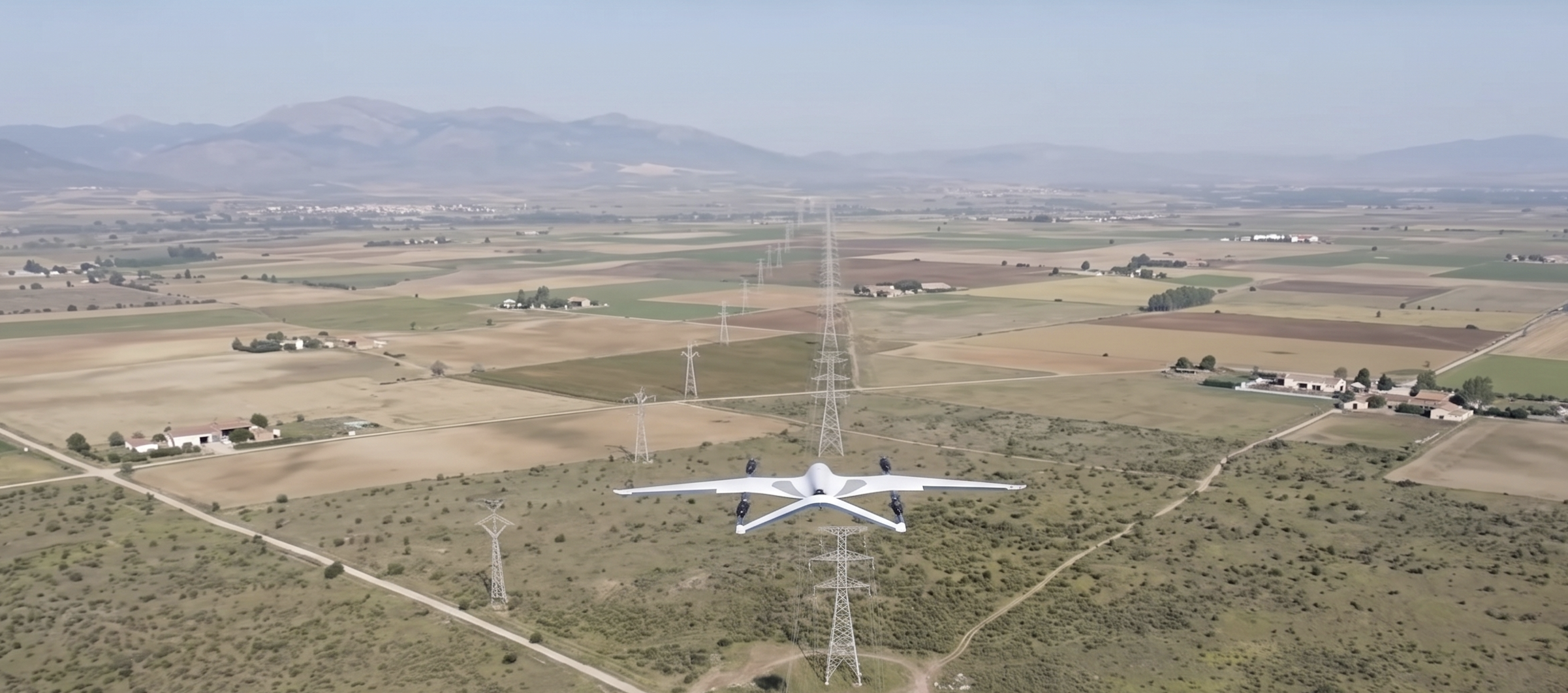
Inspection of high-voltage lines, towers, insulators and transformer substations. Detection of hotspots, encroaching vegetation and structural damage via thermography and 4K optical camera.
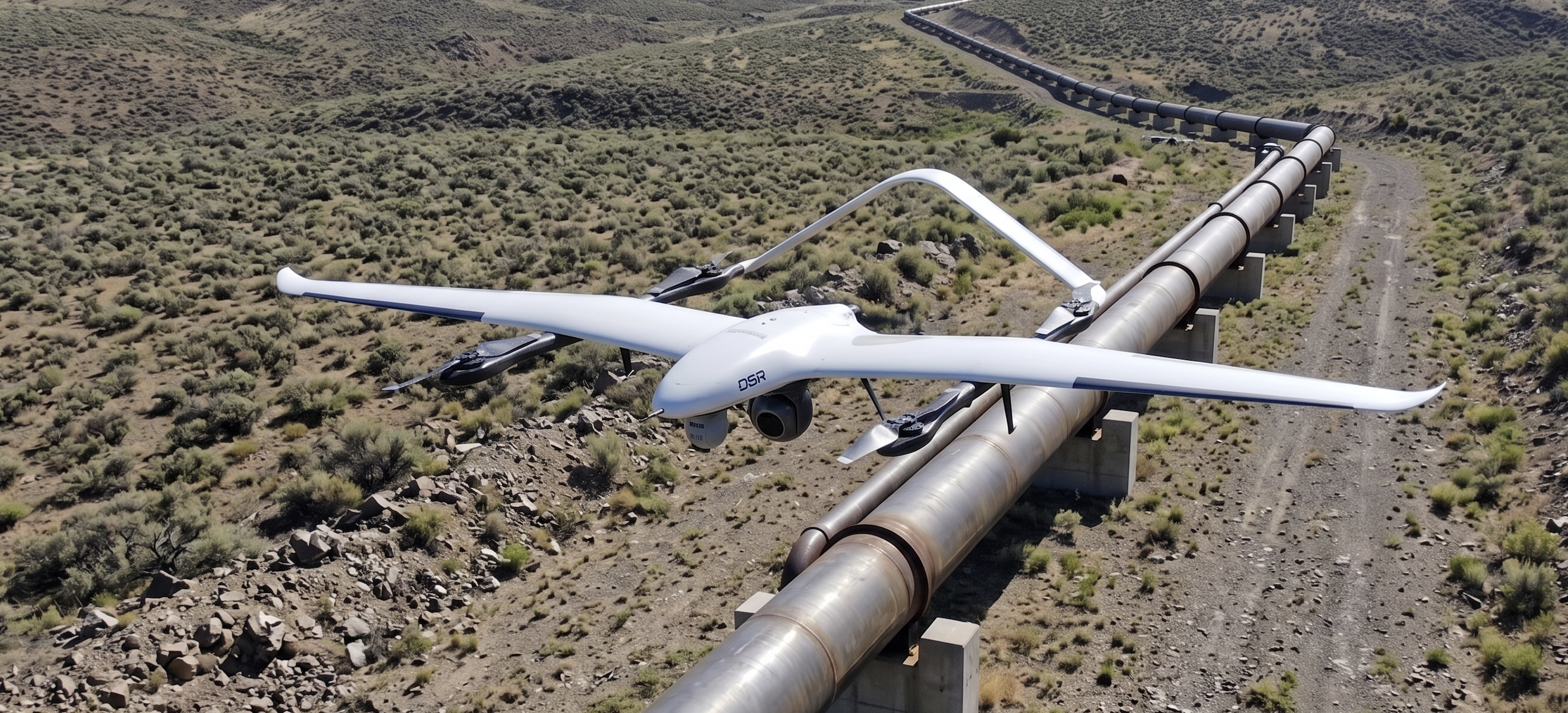
Surveillance of pipelines, regulating stations and storage plants. Leak identification via gas sensors and detection of thermal anomalies on surfaces and joints.
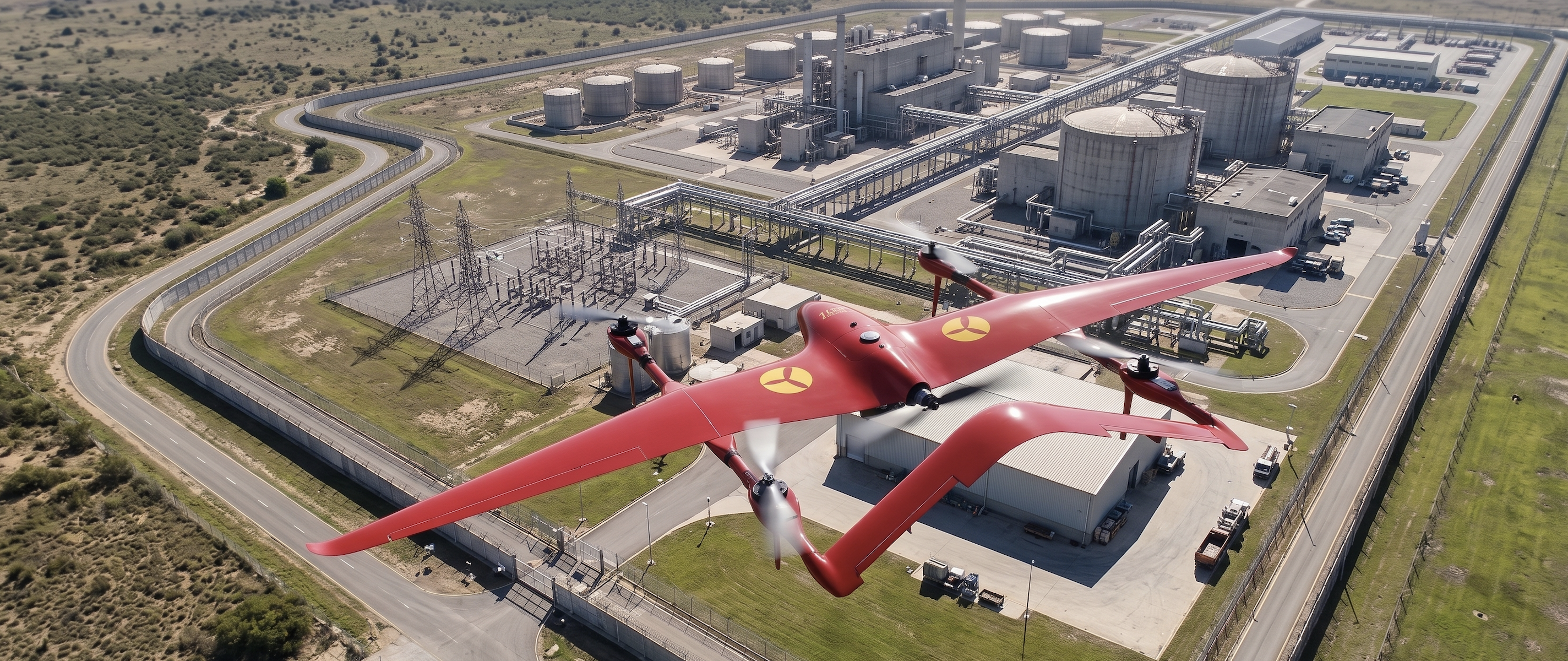
Review of petrochemical plants, refineries, wind and solar farms, tanks and tall structures. Crack, corrosion and leak detection without scaffolding or production downtime.
Manual review of high-voltage lines and gas pipelines involves worker risk, high access costs and long intervals between inspections. Autonomous missions with thermography, 4K camera and LiDAR cover hundreds of kilometres per flight, delivering georeferenced reports ready for the maintenance team.
FLIR thermographic camera identifies temperature differences in insulators, joints and conductors that anticipate failures before causing supply interruptions
LiDAR sensor generates centimetric-precision 3D models of the line corridor: conductor-to-vegetation clearances, detection of objects in the easement and tower deformation analysis per periodic review
Recurring flights over the corridor detect trees or shrubs encroaching on the safety clearance, generating georeferenced alerts for network maintenance teams
Autonomous patrols over the pipeline route with optical and thermal sensor to detect unauthorised excavations, cover damage or temperature variations indicating gas leaks
Each mission automatically generates a georeferenced report with orthorectified imagery, geolocated anomaly map and incident sheet ready to integrate into the asset management system
Petrochemical plants, refineries, wind and solar farms, storage tanks or tall structures are environments involving high risk for inspectors and high costs when scaffolding or production shutdown is required.
The drone acts as an extension of the technical team: accessing hard-to-reach zones, capturing high-resolution imagery and thermography from angles impossible for an operator, and delivering a comprehensive report within hours.
4K optical zoom camera to identify cracks, spalling and corrosion in metallic structures, tanks and facades without physical approach
Thermographic inspection of motors, transformers, solar panels and pipelines in operation to detect overheating or leaks without stopping production
LiDAR sensor generates dense point clouds for 3D modelling of facilities, storage volume calculation and structural deformation comparison between periodic inspections
Each mission is configured with the optimal payload for the inspection type. The Kite VTOL platform supports field sensor swap in under 10 minutes.
| Sensor | Electrical | Gas | Industrial |
|---|---|---|---|
| 4K EO Camera Detailed visual inspection |
✓ Primary | ✓ Primary | ✓ Primary |
| FLIR Thermography 640×512 Heat and leak detection |
✓ Primary | ✓ Primary | ✓ Primary |
| LiDAR (up to 200 pts/m²) 3D models and DTM ±3 cm |
Complementary | Complementary | ✓ Primary |
| Multispectral 5-band NDVI · NDRE · moisture |
— | — | Optional |
| Gas sensor CH₄/CO₂ leak detection |
— | ✓ Primary | Optional |
| SAR (Synthetic Aperture Radar) Vegetation penetration and night |
Optional | Optional | — |
Contact our team to design the flight plan, sensor configuration and report delivery protocol adapted to your operation